A Career in Litigation and Advocacy
For more than five decades, Melvin Dubinsky has represented clients in the courtrooms of New York, focusing on the rigorous preparation of evidence, factual investigation, and the direct advocacy required in criminal defense, civil litigation, trials, and appeals.
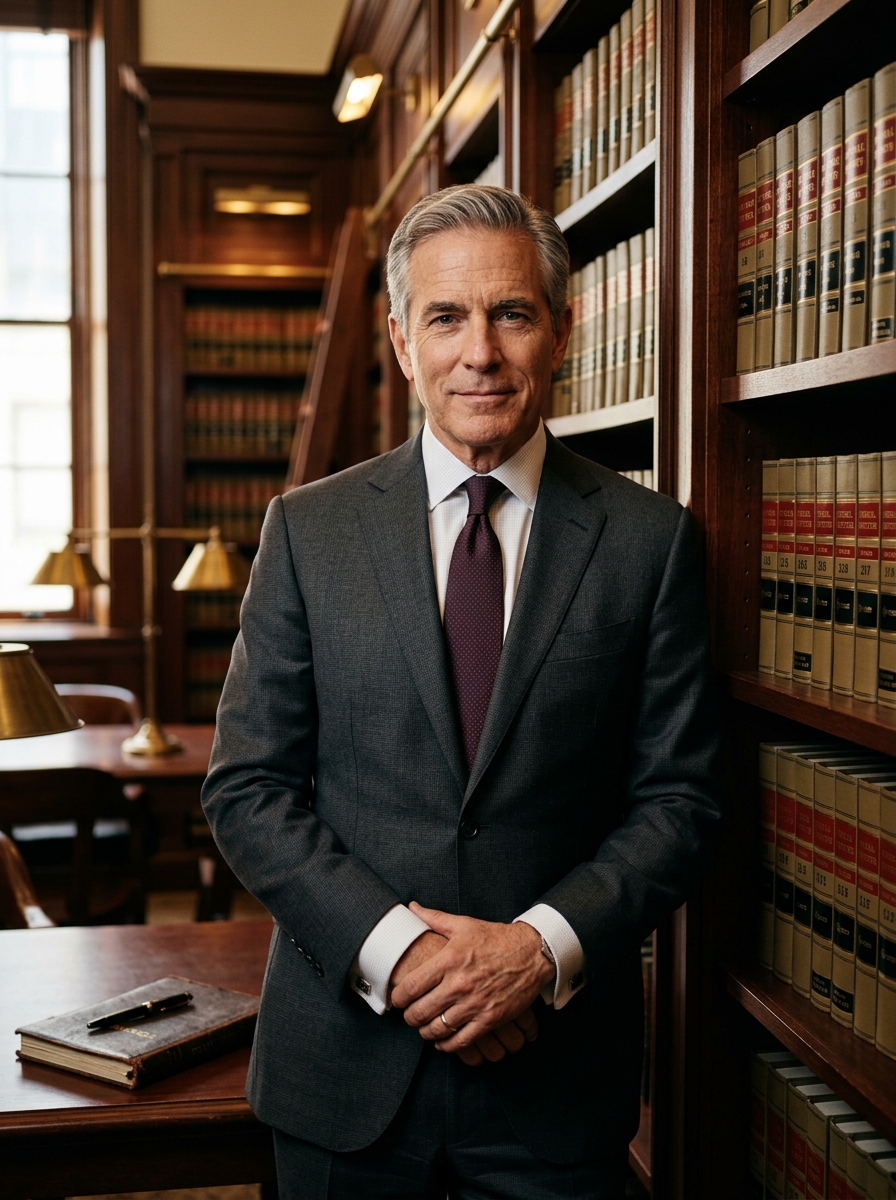
Melvin Dubinsky
Attorney-at-Law · New York, NY
Admitted to the New York State Bar in 1962. Independent litigation practice established in Manhattan in 1982.
- · U.S. District Court, Southern District of New York
- · U.S. District Court, Eastern District of New York
- · U.S. Court of Appeals for the Second Circuit
- · Supreme Court of the United States
Early Firm Experience & Courtroom Advocacy
Following his graduation from the New York University School of Law, Melvin Dubinsky was admitted to the Bar of the State of New York in 1962. During the initial decade of his career, he practiced as an associate attorney with established litigation law firms in New York City.
In this firm setting, his work centered predominantly on civil litigation, legal drafting, witness depositions, and the courtroom trial of contested matters before judges and juries.
Over subsequent years, his admissions were expanded to the federal courts located in New York City, including the United States Court of Appeals for the Second Circuit, and subsequently the Supreme Court of the United States.
Founding of Independent Firm & Criminal Defense (1982)
In 1982, Mr. Dubinsky established his own independent law practice in Manhattan. With the transition to solo practice, he broadened his range of legal services to include criminal defense representation and appellate litigation.
His criminal practice has concentrated on defending individuals accused of crimes in New York courts, rigorously evaluating police procedures, asserting constitutional protections under the Fourth, Fifth, and Sixth Amendments, and preparing cases for trial.
In parallel, his appellate advocacy has involved examining trial transcripts and evidentiary records to articulate persuasive legal arguments regarding judicial error, evidentiary rulings, and procedural fairness before appellate tribunals.
“A juror cannot evaluate what a juror does not comprehend. In both civil and criminal litigation, demonstrative clarity is the foundation of persuasive advocacy.”
— Melvin Dubinsky, “Making the Most of Graphics for Trial”
Contributions to Trial Technique & Legal Education
Alongside active litigation, Mr. Dubinsky has contributed to legal literature, authoring articles on courtroom technique, witness examination, jury selection (voir dire), and opening statements.
In August 2012, his article entitled “Making the Most of Graphics for Trial” was published in The Practical Lawyer by the American Law Institute and American Bar Association (ALI-ABA). The article examined how demonstrative visual exhibits clarify material facts and enhance juror comprehension during trials.
His published scholarship led to instructional presentations before the New York City Bar Association and the New York County Lawyers' Association, as well as an instructional video presentation recorded for Lawline. In October 2016, he was invited to present a guest lecture to a Legal Writing class at the Hofstra University Maurice A. Deane School of Law.
Inquiries regarding attorney availability are welcomed by telephone or through the inquiry form.
Contact Melvin Dubinsky